← Back to lookup
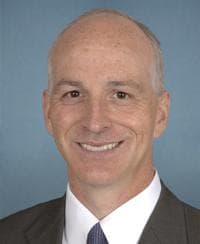
Adam Smith
U.S. Representative, Washington
2264 Rayburn House Office Building
Summary
Adam Smith was a Scottish economist and philosopher who was a pioneer in the field of political economy and key figure during the Scottish Enlightenment. Seen by many as the "father of economics", or the "father of capitalism", he is primarily known for two classic works: The Theory of Moral Sentiments (1759) and An Inquiry into the Nature and Causes of the Wealth of Nations (1776). The latter, often abbreviated as The Wealth of Nations, is regarded as his magnum opus, marking the inception of modern economic scholarship as a comprehensive system and an academic discipline. Smith refuses to explain the distribution of wealth and power in terms of divine will and instead appeals to natural, political, social, economic, legal, environmental and technological factors, as well as the interactions among them. The work is notable for its contribution to economic theory, particularly in its exposition of the concept of absolute advantage.
Source: Wikipedia · as of Aug 21, 2026
Scorecard
The record at a glanceA quick read on how Rep. Smith votes and legislates this Congress. Every figure links to its full record below.
Views on the Issues
See where Rep. Smith stands — alongside Democratic and Republican positions.
Sponsored Legislation
See all 237 →HR 10077
HR 10077 · Introduced Aug 10, 2026 · Transportation and Public Works
Aug 10, 2026: Referred to the House Committee on Transportation and Infrastructure.
HRES 1468
HRES 1468 · Introduced Jul 30, 2026 · Congress
Jul 30, 2026: Referred to the House Committee on Ways and Means.
HR 9765
HR 9765 · Introduced Jul 16, 2026 · Education
Jul 16, 2026: Referred to the House Committee on Education and Workforce.
HR 9766
HR 9766 · Introduced Jul 16, 2026 · Labor and Employment
Jul 16, 2026: Referred to the House Committee on Education and Workforce.
HR 9657
HR 9657 · Introduced Jul 13, 2026
Voting Analytics
Full record →Computed over Rep. Smith's 645 roll-call votes in the 119th Congress, of which 450were party-split (the two parties' majorities on opposite sides). Unanimous votes are excluded so the rates aren't inflated.
98.9%
Votes with the Democratic majority
On party-split votes
1.1%
Votes with the other party
The bipartisanship read
3.1%
Missed votes
Chamber median 2.2% · above median
Placement on the House's left–right spectrum
More liberalMore conservative
Based on how often Rep. Smith sided with the Republican majority on party-split votes, ranked against all representatives. This is a vote-agreement placement, not an academic ideology score.
Source: Clerk of the U.S. House (roll-call votes) · as of Sep 9, 2025
Legislative Activity
What Rep. Smith has put their name on in the 119th Congress, and across their career. Most bills — from every member — never become law; the enacted count is context, not a grade.
21
Sponsored this Congress
237 all-time
0
Became law this Congress
0% of those sponsored
5,028
Cosponsored, all-time
Signed on to others' bills
237
Bills sponsored, all-time
Source: Congress.gov · as of Aug 21, 2026
Landmark Legislation
Major bills from recent Congresses — outcomes and party vote breakdowns. For Rep. Smith's individual votes, view their full record on Congress.gov.
Inflation Reduction Act
Enacted2022 · H.R. 5376Largest climate investment in U.S. history; allowed Medicare to negotiate drug prices; reduced the federal deficit.
D: 50 yeaR: 0 yeaFinal: 51–50
CHIPS Act
Enacted2022 · H.R. 4346Invested $52 billion in domestic semiconductor manufacturing to reduce dependence on foreign chip supply chains.
D: 47 yeaR: 17 yeaFinal: 64–33